










Skip to content
SuperMatics
Materials intelligence·AI × physics for new superconductors

New superconductors, found with AI.

Superconductors that work at higher temperatures would rewrite global energy, quantum computing, and medical infrastructure. They are hiding in chemistry today’s AI can’t search. SuperMatics finds them: generative AI built on 18 years of physics theory, recently confirmed by Stanford and SLAC in Physical Review Letters, and running today with collaborators at UIUC and UC Berkeley.

PRLNew · 2026·MEL mechanism confirmed by Stanford and SLAC in Physical Review Letters

Built with

  • UIUC
  • UC Berkeley
  • Hyunsung TNC
  • CAN Superconductors
scroll
What this unlocks

The materials we’re after change the world.

Higher-temperature superconductors and the quantum materials around them are gating ingredients in three of the largest hard-tech buildouts of the next decade. Find them and entire industries move.

01Energy

$300B+

Lossless power, at grid scale

Five to ten percent of every electron sent through transmission lines is wasted as heat. Higher-temperature superconductors reclaim that loss. They also unlock magnetic fusion, lossless storage, and the AI-era power grid.

02Computing

10,000×

The bottleneck on practical quantum

Every leading quantum computer runs on superconducting circuits. Materials that hold quantum coherence longer are the gating constraint for general-purpose quantum hardware, and for the low-power dense processors AI buildouts demand.

03Medicine & Science

Next-gen

MRI, accelerators, fusion magnets

From clinical imaging to fusion confinement to next-generation accelerators, higher-Tc materials are the gating ingredient. Today every one of these systems is held back by extreme cryogenic constraint.

These aren’t speculative markets. They are the global power grid, the AI buildout, and modern medicine. The materials are the limiter.

How we’re different

Most AI for materials misses the materials that matter.

Three things we do that nothing else does. Together, they are why leading labs in modern condensed matter measurement have agreed to collaborate with us.

01Physics first

Not just AI on more data.

Most AI for materials is trained on simulations that silently fail on the materials breakthroughs actually live in. We start from a physics framework purpose-built for those exact systems, and search inside it.

Generic ML can't see what isn't in its training set.

02Decades, productized

Eighteen years of theory.

MEL is the only physics framework built specifically for high-temperature superconductors. Its originator developed it over eighteen years before we wrote a line of platform code. We didn't invent the science. We made it searchable.

Time you can't compress with capital.

03Confirmed in lab

Real measurements close the loop.

Every prediction is measured in collaboration with research groups at UIUC and UC Berkeley, labs deeply experienced in the techniques each prediction depends on. Confirmations feed back as priors. Predictions sharpen with every cycle.

AI predictions only matter when reality validates them.

0Years of physics research
0+Patents issued and pending
0Named research collaborations

The technical comparison, DFT vs MEL, lives on /science

Read the science
Independent validation·Stanford / SLAC · PRL 2026

The mechanism MEL was built around is now experimentally confirmed.

A 2026 paper in Physical Review Letters from Stanford and SLAC reports the experimental signature MEL has predicted for years: charge order and superconductivity that phase-lock and grow together, not against each other. The science we sort on is no longer hypothesis.

PHYS REVL
Peer-reviewed · 2026Physical Review Letters
Cooperative phase coherence of charge order and superconductivity in cupratesLee et al. · Stanford University · SLAC National Accelerator LaboratoryResonant soft x-ray scattering·YBa₂Cu₃O₇₋δ·DOI 10.1103/g41t-8456
Read in PRL
The picture, in one chartOrder parameter vs T
Tcρ_MEL · cooperativeΔ_SCold view (competition)T → 0T > Tc|OP|

Old view (competition): charge order suppresses Δ_SC below Tc. Confirmed view: both Δ_SC and ρ_MEL rise together with locked phases — exactly the cooperative regime MEL describes.

Why this is load-bearing

The whole platform sorts on this one inequality.

MEL's coupled Ginzburg-Landau functional carries an explicit cooperative coupling γ₁ ρMEL |ψ|². When γ₁ > 0, the modulation locks energetically to the condensate; the wavevector pins to the lattice; Tc gets a lift. The SuperMatics classifier scores candidates on exactly this normal-state stiffness α(q).

    Couplingγ₁ ρ_MEL |ψ|² · cooperative
    SymmetryB₁g form factor
    Q* shiftO(|ψ|²) · independent
    Descriptorα(q) · momentum-resolved
  1. 01What they measured

    Resonant soft x-ray scattering on a cuprate

    Stanford and SLAC tracked the charge-density-wave order through the superconducting transition, with resolution high enough to read its phase coherence directly through Tc.

  2. 02What they found

    BCS-like growth, near-perfect wavevector lock

    Below Tc, CDW phase coherence grows in lockstep with the superconducting condensate, and the CDW wavevector locks onto the lattice rather than drifting. The two orders reinforce each other; they do not compete.

  3. 03Why it matters for MEL

    The exact mechanism MEL was built around

    MEL's coupled Ginzburg-Landau functional carries an explicit cooperative term γ ρ_MEL |ψ|² and predicts precisely this lock-in. The platform's classifier sorts candidates on this criterion.

From the scientific founder

“We have argued for years that charge order and superconductivity in cuprates reinforce one another rather than compete. The Stanford and SLAC measurement reads the same cooperative coupling out of the data, in the same family of materials, with the same wavevector lock-in. The microscopic story we built the platform on is the story the experiment tells.”
James Kim, Ph.D.·Scientific Founder, SuperMatics·Originator of the MEL framework

What MEL predicted theoretically, an independent group measured. The platform sorts candidates on the exact criterion this result isolates.

See the formalism
The Tc landscape

Every Tc gain unlocks a new category of physics.

Forty years of progress. Two physics families. Most of the landscape above the liquid-nitrogen line has barely been searched. MEL searches it, including the unconventional and high-Tc regimes where conventional AI cannot.

Nb₃Ge23 K
MgB₂39 K
YBCO92 K
BSCCO110 K
Hg-1223138 K
LaH₁₀250 K
RT293 K
LN₂ · 77 K
  • 0 K
  • 50 K
  • 100 K
  • 150 K
  • 200 K
  • 250 K
  • 300 K

MEL hunt range · above LN₂ · novel and unconventional families

Conventional · BCSUnconventional · cuprateConfirmed recordFrontier prize
  1. YBCO·92 K

    YBa₂Cu₃O₇ · 92 K

    The first cuprate to break liquid nitrogen. Workhorse of every commercial HTS magnet today.

  2. BSCCO·110 K

    Bi-2223 · 110 K

    Long-wire HTS used in fault-current limiters and motors. Higher Tc, harder fabrication.

  3. Hg-1223·138 K

    Hg-1223 · 138 K

    Ambient-pressure cuprate record. The highest Tc humanity has confirmed without extreme pressure.

  4. LaH₁₀·250 K

    LaH₁₀ · 250 K · 170 GPa

    The all-time record, but only stable inside a diamond-anvil cell. Not deployable.

  5. RT·293 K

    Room temperature · 293 K

    The prize. An ambient-pressure room-temperature superconductor rewrites power, computing, and medical imaging at once.

Public physics values · BCS conventional ceiling · cuprate family · ambient-pressure and high-pressure records

How it works

From candidate to lab-confirmed material.

Five stages, running continuously, end to end. Click any one to step through. The loop never stops. Each closed cycle sharpens the predictions in the next.

Cycle #137·
running

Stage 01

Classify

Read the material's playbook

Feed the platform a candidate material. It reads the atomic structure and identifies which quantum behaviors the structure can host: superconductivity, charge order, spin order, orbital order. Think of it the way a chess engine reads a board. The moves a position permits are now known.

Material classified · the physical primitives any candidate must support
1 / 5
ψ_CDWchargeψ_SDWspinψ_PDWpairψ_orborbitalsymmetry group · P4/mmm
01·classify
live
Platform · running

The platform, running.

A live trace of the discovery pipeline, end to end: classifying candidates, generating new ones, screening, synthesizing, closing the loop with a collaborating lab. Hover any line to decode the physics behind it.

events

1,242

confirmations

47

p50 latency

1.8 s

CLASGENDMFTEXP / OKwarn
supermatics · pipeline.log
streaming
events · 1,242confirmed · 47p50 · 1.8 s
events / 700ms
hover any line above to decode the physics
Validation network

The labs that close the loop.

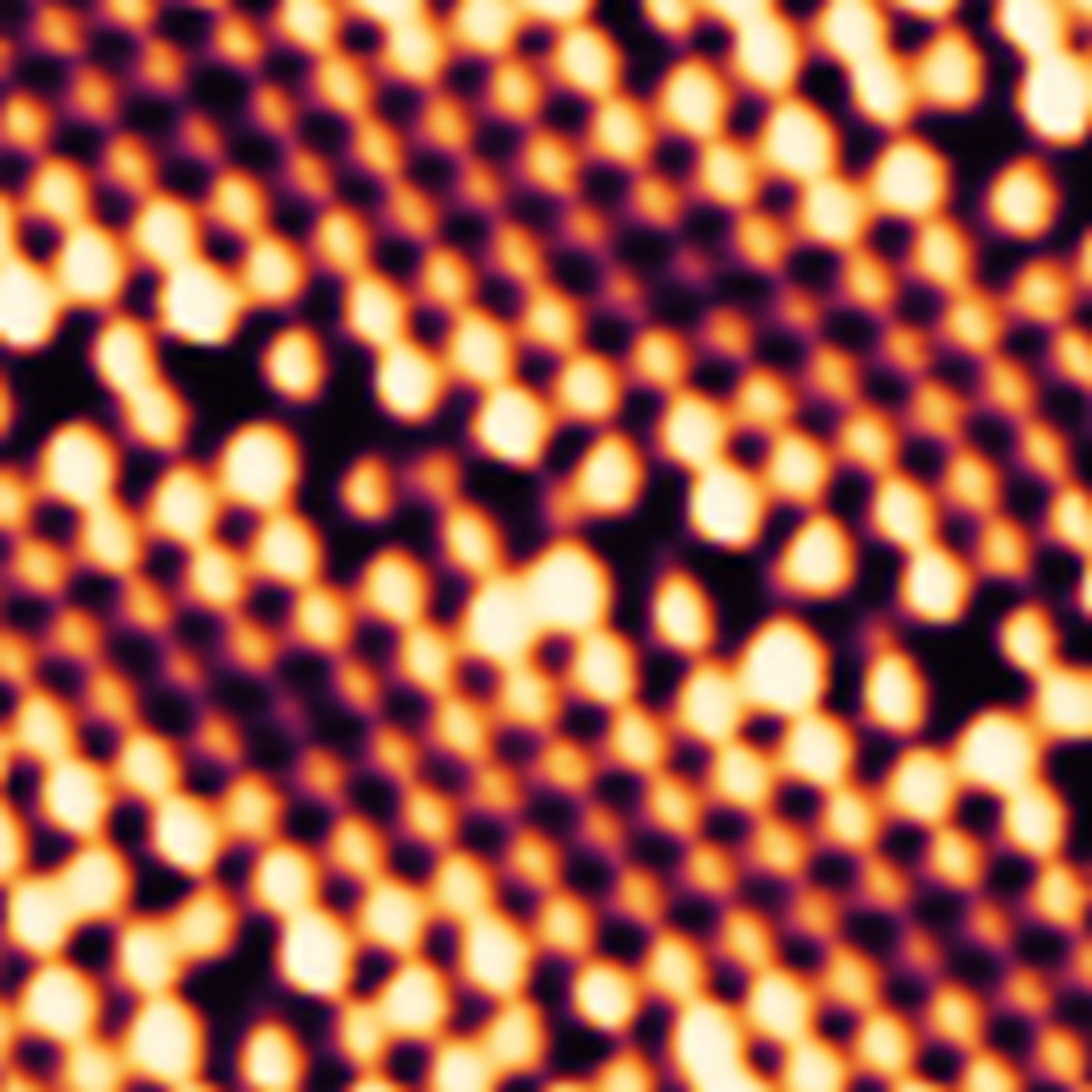
Every prediction is measured. Our collaborators run the techniques MEL was designed to be confirmed by: scanning tunneling microscopy at UIUC, synthesis at UC Berkeley, with further research discussions underway across leading correlated-electron groups.

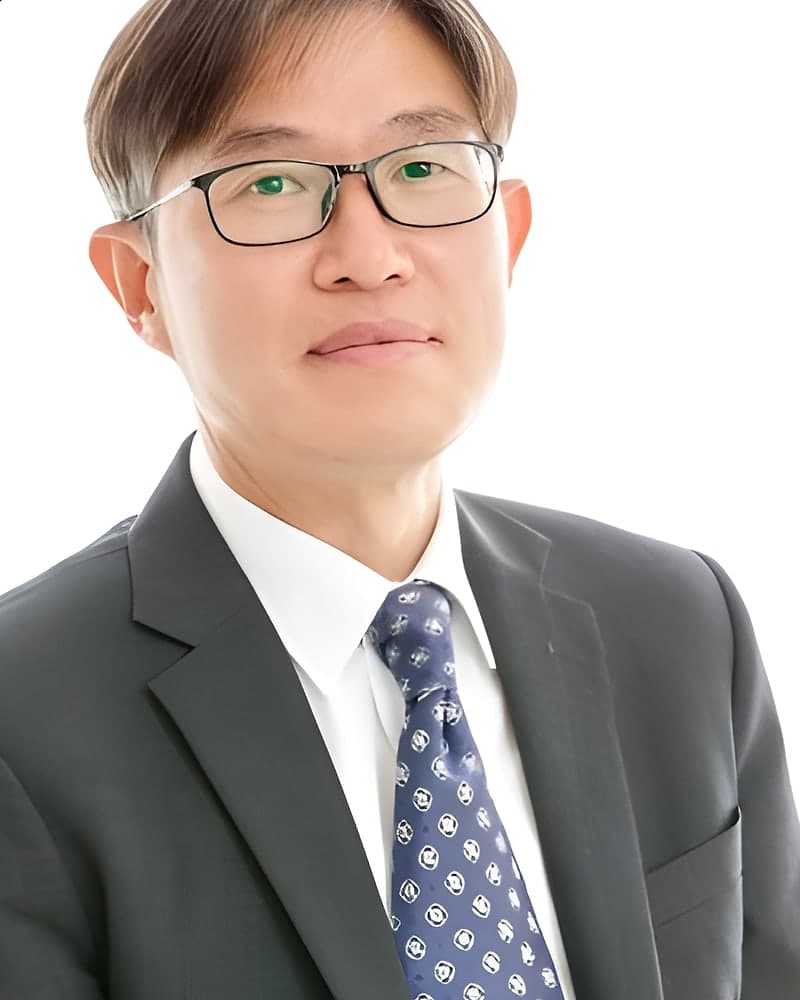
  1. Prof. Vidya Madhavan

    University of Illinois Urbana-Champaign

    STM / STS · FT-STS

    Experimental collaboration · STM/STS, FT-STS

  2. QB3 / Berkeley Nanofabrication Center

    UC Berkeley · Waqas Khalid

    Synthesis · Fabrication

    Research infrastructure · synthesis and fabrication

  3. CAN Superconductors

    Czech Republic · HTS manufacturing

    HTS synthesis · Scale-up

    Industrial HTS synthesis of MEL candidates · advisory on synthetic routines and scale-up

  4. Wilson Sonsini Goodrich & Rosati

    WSGR

    Patent · Corporate

    Patent strategy · IP and corporate counsel

Four named collaborations · more underwayBecome a partner
Latest

Momentum, in public.

What changed this quarter. Concrete artifacts only: a published paper, signed collaborations, a shipped build of the classifier, and the roles we’re hiring for.

  1. PAPER2026 · Q2

    Independent experimental confirmation in PRL

    Stanford and SLAC publish in Physical Review Letters (Lee et al., 2026). Resonant soft x-ray scattering on a cuprate shows CDW phase coherence growing BCS-like below Tc with near-perfect wavevector locking. The cooperative CDW-SC behavior MEL was built to predict, measured directly.

  2. PARTNER2026 · Q2

    Industrial HTS synthesis partner

    CAN Superconductors begins build of MEL-generated high-Tc candidates and advisory on synthesis routines.

  3. PAPER2025 · Q4

    MEL criterion for metallic superconductivity

    Eighteen years of foundational research distilled into one criterion. Back-test agrees with measured Tc within ±1 K across the public superconductor literature. arXiv:2512.03368.

  4. PARTNER2025 · Q4

    Academic collaboration network engaged

    Madhavan group (UIUC) · QB3 / Berkeley Nanofabrication Center for synthesis · further discussions underway with leading correlated-electron groups.

  5. BUILD2025 · Q4

    MEL classifier v0.4 in production

    Classification, generative proposal, computational triage, and synthesis routing wired without manual handoffs. Generating candidate batches daily across the platform.

  6. TEAM2026 · ongoing

    Founding CEO and Solutions Architect open

    Berkeley-anchored, remote possible. Looking for builders with deep-tech instincts and the patience for hard physics.

Get in touch

Three ways to work with us.

01 · Investors

Back materials intelligence for superconductors.

Deep-tech capital at the AI × physics interface. Brief by invitation.

Open investor brief

02 · Research collaborators

Bring an experimental, theoretical, or ML capability.

Condensed matter theorists and experimentalists. If your work is at the frontier of unconventional superconductors or quantum materials, let’s talk.

research@supermatics.io

03 · Builders

Join the founding team.

CEO and Solutions Architect open in Berkeley. Foundational work, ownership stakes.

See open roles

Or write to contact@supermatics.io. We read everything.