Skip to content
SuperMatics

Investors

Materials intelligence for the next superconductors.

Superconductors that work at higher temperatures would rewrite energy, computing, and medicine. SuperMatics finds them: AI guided by eighteen years of physics, in collaboration with research groups at UIUC and UC Berkeley.

PHYS REVL
External validation · Physical Review Letters · 2026Stanford / SLAC measure the cooperative CDW-SC mechanism MEL was built around.Lee et al. · resonant soft x-ray scattering · DOI 10.1103/g41t-8456
Read in PRL

18yrs

Physics theory

10+

Patents

4

Named collaborating labs

±1K

Back-test accuracy

Why now

Three things landed at the same time.

AI is finally fast enough. The physics is finally productized. The labs are finally ready to confirm at speed. Each was gating; together they open the search.

01

AI got fast

Generative ML can now sample thousands of candidate compositions in the time it took a single DFT calculation a decade ago.

02

Physics got confirmed

Eighteen years of MEL theory turned correlated-electron chemistry into a search space a model can learn. In 2026, a Stanford / SLAC group published the matching experimental signature in Physical Review Letters: CDW and superconductivity reinforcing each other, exactly as MEL predicts.

03

Labs are ready

Active collaborations at UIUC and UC Berkeley already run the measurement cycles that close the loop, with research discussions underway across other leading correlated-electron groups.

Market & analogs

A hard problem, a proven return profile.

The end markets are already large and accelerating. The reference class for a physics-grounded discovery platform is public: pharma-AI established what the public markets and strategic acquirers will underwrite. Materials intelligence is the next domain.

Superconductor market

$9B → $25B+

2024 → 2035 · HTS segment growing ~12% annually, pulled by quantum hardware, power infrastructure, and medical imaging.

Materials intelligence TAM

4 wedges

Superconductors, datacenter thermal, energy conversion, battery materials. One physics-grounded platform across all four.

NASDAQ: RXRX

Recursion Pharmaceuticals

AI-native drug discovery

Public 2021. Peak market cap above $5B at IPO; acquired Exscientia in 2024 to consolidate the AI-bio platform thesis.

NASDAQ: SDGR

Schrödinger

Physics-grounded simulation for drug design

Public 2020. Has carried a multi-billion-dollar market cap on a physics-first computational thesis. The closest public analog for MEL's positioning.

Acquired

Exscientia

AI-designed molecules

Acquired by Recursion in 2024 for ~$680M, confirming strategic M&A demand for physics- and AI-grounded discovery platforms.

Public market data · cited as reference, not a forecast

Proof points

The pieces are assembled.

See platform running

Physics edge

18 yrs

of foundational research

Published, peer-reviewed, and patent-protected. The only search space purpose-built for the high-Tc regime.

Operating system

Live

end-to-end pipeline

Classification → generative proposal → triage → synthesis routing → experimental feedback. One continuously running loop.

Validation network

Active

UIUC + UC Berkeley

Research cycles running with the Madhavan group (UIUC) for STM/STS and FT-STS measurement, and QB3 / Berkeley Nanofabrication Center for synthesis. Discussions underway across additional correlated-electron groups.

IP base

10+

patents · counsel by Wilson Sonsini

Issued and pending filings on MEL theory, candidate materials, process routes, and platform infrastructure. Patent strategy by Wilson Sonsini Goodrich & Rosati.

Defensibility

Why this is hard to replicate.

Physics IP

Eighteen-year head start

MEL is patent-protected and continuously expanding. Anyone replicating from scratch is starting eighteen years behind.

Partner network

Techniques, not just data

Validation lives in labs deeply experienced in each measurement, not on the open internet that AI labs scrape.

Flywheel

Compounding patent inventory

Physics-correct generative search converts compute into protected IP faster than any human-led lab can.

Depth

Originator-led science

AI labs can hire ML engineers. They can't replicate eighteen years of correlated-electron theory by reading papers.

From the scientific founder

“Every high-Tc breakthrough since the 1980s has been an accident waiting on instinct. The Modulated Electron Lattice framework replaces the accident with a search, and the search with a loop a lab can confirm.”
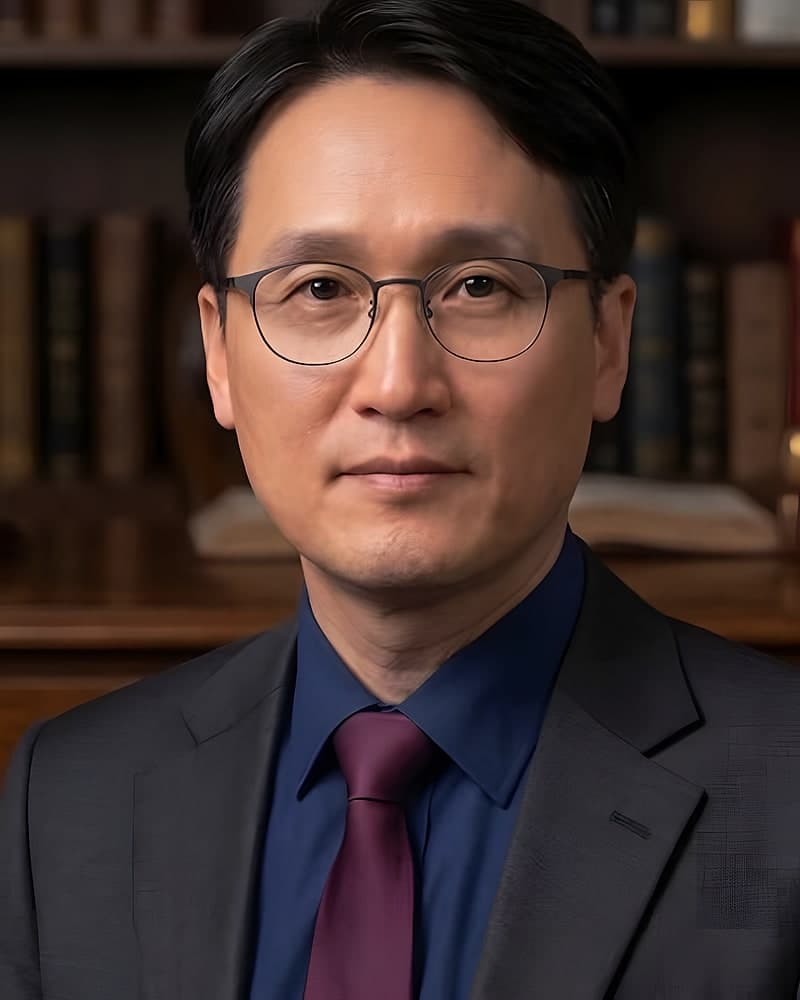
James Kim, Ph.D.·Scientific Founder, SuperMatics·CTO, Hyunsung TNC

Recent traction

What’s shipped in the last two quarters.

Dated, verifiable. The momentum that earns the next twelve months of capital.

  1. 2026 Q2External validationStanford / SLAC publish in Physical Review Letters (Lee et al., 2026). Resonant soft x-ray scattering on a cuprate measures the cooperative CDW-SC phase coherence and wavevector lock-in that MEL was built to predict. Independent confirmation of the core mechanism the platform sorts on. journals.aps.org/prl/abstract/10.1103/g41t-8456.
  2. 2025 Q4PaperMEL criterion published on arXiv (2512.03368). Eighteen years of theory in one criterion. Back-test agrees with measured Tc within ±1 K across the published superconductor literature.
  3. 2025 Q4PlatformMEL classifier v0.4 in production: classification, generative proposal, computational triage, and synthesis routing wired end to end.
  4. 2026 Q1NetworkMadhavan group (UIUC) and QB3 / Berkeley Nanofabrication Center engaged. Research discussions underway with additional correlated-electron groups.
  5. 2026 Q2IndustrialCAN Superconductors begins build of MEL-generated high-Tc candidates and advises on synthesis routines for scale-up.

Next 12 months

What capital accelerates.

  1. Q2

    Pipeline at scale

    MEL classifier and generative model running across focused superconducting and thermal search spaces.

  2. Q3

    Validation cohort

    First experimental back-tests on generated candidates. Collaborating groups at UIUC confirm predictions, with additional measurement cycles opening across partner labs.

  3. Q4

    IP wave

    Patent filings around generative candidates and process routes. Investor-grade demo of the workspace.

  4. Q1

    Commercial wedge

    First partner-led commercial conversations on thermal and superconducting materials.

12-month directional roadmap · specific commitments shared in diligence

Commercial wedges

Focused markets first.

01Lead wedge

Higher-Tc superconductors

Quantum hardware · power transmission · medical imaging · accelerator magnets. Industrial scale-up with CAN Superconductors.

02Adjacent

Datacenter thermal materials

Heat-spreaders and phase-change media for AI training clusters and high-density compute.

03Adjacent

Energy conversion

Solid-state cooling, thermoelectric recovery, refrigerant-free climate systems.

04Adjacent

Battery and ionic materials

Solid-state electrolytes and cathodes tuned for high-rate cycling and density.

Use of funds

Build the company around the loop.

Platform & ML engineering

~40%

Founding CEO and Solutions Architect, generative model training, scientific software, and the infrastructure for continuous discovery runs across multiple material families.

Experimental validation

~30%

Collaborating lab cycles, synthesis access, candidate measurement, and extending continuous back-testing against the public superconductor literature to additional correlated-electron families and high-pressure regimes.

IP prosecution

~15%

Patent filings on generative candidates, process routes, and platform components, with Wilson Sonsini as patent counsel. Freedom-to-operate coverage across the lead wedge.

Commercial & partnerships

~15%

Founder-led conversations into semiconductor, energy, and quantum-hardware materials buyers; deepened relationship with CAN Superconductors for industrial scale-up of lead candidates.

Allocation directional · specific budget shared in diligence

Return path

Three ways this returns capital.

01

IP licensing

MEL-generated candidates and synthesis routes are patented and licensed to industrial manufacturers, quantum-hardware companies, and energy majors.

Year 1–3 · recurring revenue

02

Strategic acquisition

A physics-grounded materials platform is a strategic asset for semiconductor, quantum, and energy companies with large materials R&D mandates.

Year 4–7 · M&A exit

03

Platform at scale

The model is established in pharma-AI: a continuously learning discovery platform commands platform multiples once the candidate library reaches scale.

Year 7–10 · IPO path

Most asked

The questions diligence opens with.

01Why hasn't this been done?

It has been tried narrowly. Standard materials AI is trained on density functional theory, which silently fails on the materials that matter most. MEL is the first physics-grounded representation built specifically for high-Tc superconductors and the correlated quantum systems around them. Eighteen years of accumulated theory make the search space tractable in a way generic ML can't replicate.

02What stops large AI labs from entering?

Two structural moats. The physics: MEL took eighteen years to develop and is patent-protected. The data: experimental validation depends on collaborating labs deeply experienced in each measurement technique, not on the open internet. A frontier model can read every paper and still miss the framework that makes the search work.

03What's the technical risk?

MEL is continuously back-tested against the published superconductor literature, including the SuperCon database and recent high-pressure and unconventional-superconductor reviews. Predictions stay within ±1 K of measured Tc across the validated sample shown on the science page. The core mechanism, cooperative CDW-superconductivity phase coherence, was independently confirmed in 2026 by a Stanford / SLAC group in Physical Review Letters (Lee et al., 10.1103/g41t-8456). The platform is running today; initial measurement cycles with collaborating labs are underway. The remaining risk is generalization to entirely new families, which is exactly what this round funds.

04When does revenue start?

IP licensing inside Year 1–2 as the first generative candidates hit patent. Discovery partnerships with industrial manufacturers (semiconductor, energy, and quantum-hardware companies with active materials R&D) follow in Year 2–3. Long-term platform multiples compound as the candidate library grows.

05Why this team?

The originator of the MEL framework leads the science. Eighteen years of theory developed at Hyunsung TNC. The founding team brings physics-trained ML and experimental backgrounds. Active research collaborations at UIUC and UC Berkeley, with discussions underway with additional correlated-electron groups.

06What instrument and terms?

Raising a $10M seed on a SAFE basis. Valuation cap, discount, and allocation are handled directly with aligned funds under NDA. Reference class for the return profile is physics-grounded AI in drug discovery. Recursion peaked above $5B market cap, Schrödinger has held multi-billion-dollar levels on its physics-first thesis, and Exscientia was acquired for ~$680M. Materials intelligence is the next domain.

07What does governance look like?

Founder-led to date, with Wilson Sonsini Goodrich & Rosati as corporate and patent counsel. As a SAFE round we are not setting board composition at close; governance is shaped in the priced round. Information rights and reporting cadence are agreed in the SAFE side letter for any lead participant who wants them.

Diligence

Specifics in the conversation.

The public site is intentionally high-level: thesis, proof, milestones, and the path to diligence. Round terms (cap, discount, lead, syndicate) are handled directly with aligned funds.